Industrial Photography in Pune: How Manufacturers Can Turn Operations Into Powerful Visual Content
What industrial photography communicates
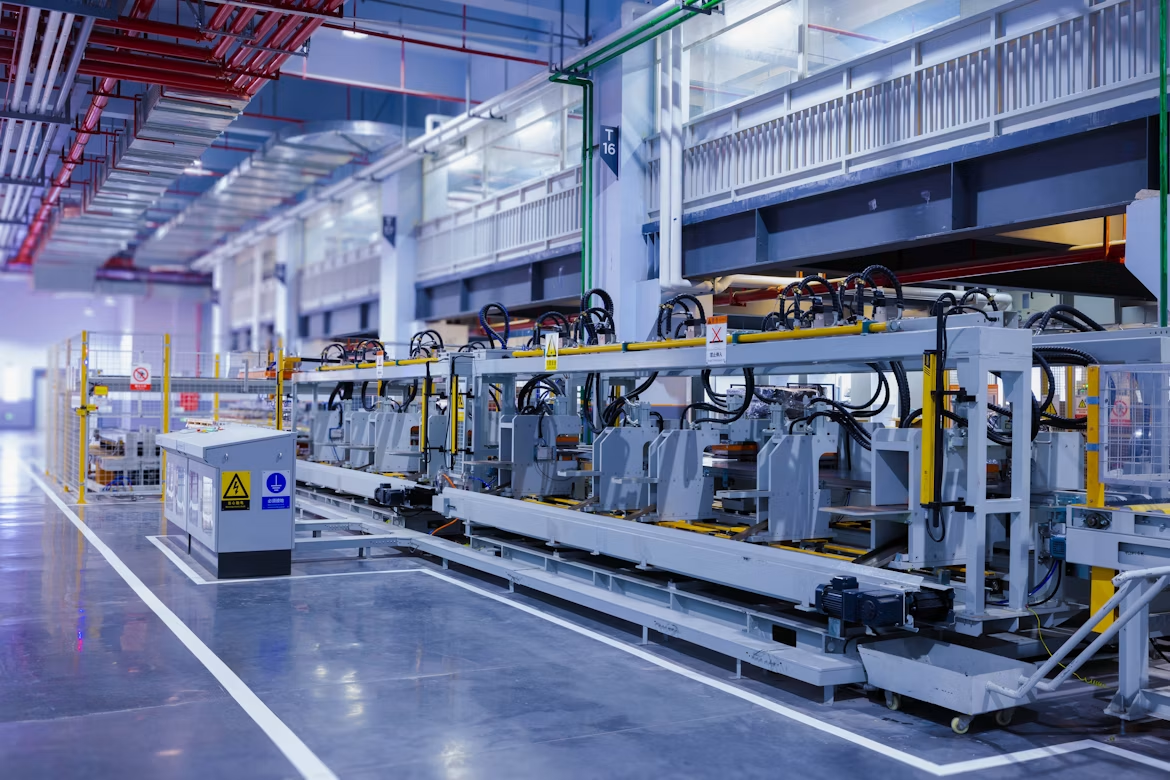
Industrial photography is not simply about making a factory look attractive. Its real value is communication. A photograph can show scale, cleanliness, technology, expertise, workflow and the people behind production.
For a B2B buyer, those cues matter. A customer considering a manufacturing partner wants confidence that the company has the equipment, processes and team needed to deliver consistently. Clear images can support that confidence before a sales conversation begins.
A strong industrial shoot can cover the facility, machinery, people, production stages, quality checks, warehouse operations and final products. The resulting library gives the company a wide range of content to use throughout the year.
Why professional factory photography is different
Factories are challenging photography environments. Lighting can be mixed, spaces can be large, machines may have reflective surfaces, and production areas may be difficult to frame. Safety and workflow also have to be respected.
Professional industrial photography starts with planning. The photographer needs to understand which areas are important, which processes can be photographed during operation, what protective equipment is required and when the facility will be least disruptive to photograph.
Equipment choices matter as well. Wide-angle images can communicate the scale of a facility, while longer lenses can isolate details or capture people working without interrupting the process. Controlled lighting may be useful for machines or product components that need extra definition.
Build a shot list around the sales story
The best industrial shoots are not random collections of factory images. They are organised around the questions a prospective customer may ask.
Start with the big picture. Photograph the exterior, reception, production floor and major facility areas. Then move into capabilities: machinery, specialist equipment, production stages and quality-control processes.
Next, include people. Engineers, operators, technicians and managers can help communicate competence and culture. Authentic working photographs are usually more convincing than posed images because they show the business functioning.
Finally, photograph finished products and details. These images can connect the manufacturing capability to the actual output customers receive.
Industrial photography for websites and presentations
Manufacturers often need the same visual assets in many formats. Website banners may need wide horizontal images. Sales decks may require tightly framed photographs. Brochures may need high-resolution images that can survive print production.
During the shoot, it helps to capture both wide and close compositions. Leave useful negative space in selected frames so designers can place headings, logos or text without covering important information.
It is also worth creating a consistent visual treatment across locations. If a company has multiple plants, photographing each facility using similar compositions and processing can create a cohesive corporate identity.
Safety should be part of the creative process
Industrial photography must work within the rules of the facility. The photographer should understand required personal protective equipment, restricted areas, machinery clearance, walking routes and production schedules.
The visual result should never depend on unsafe behaviour. Good planning makes it possible to capture dynamic images while keeping employees, equipment and the photographer protected.
A pre-shoot walkthrough is often useful. It allows the production team and photographer to identify strong visual locations and decide which activities can be photographed without interfering with operations.
How manufacturers can use the image library
A professional industrial photography library can support more than a website. Images can appear in capability presentations, vendor registration documents, recruitment campaigns, LinkedIn posts, exhibition graphics, press announcements, sustainability reports, corporate brochures and tender documentation.
Because manufacturing businesses often update marketing content gradually, storing the original high-resolution files is important. Cropped versions can be created later for specific channels.
For sales teams, a well-organised image library also reduces the time spent searching for usable photographs. Instead of requesting a new photo every time a proposal is prepared, the team can pull from an approved collection.
Choosing an industrial photographer in Pune
Look for a photographer who understands commercial objectives as well as technical photography. Ask to see examples of factories, machinery, people and finished products rather than only general corporate portraits.
Discuss practical questions before booking: access requirements, working hours, travel inside the facility, protective equipment, retouching, deliverables and turnaround. A professional process should be clear before the camera arrives on site.
The photographer should also be comfortable working around operational constraints. Manufacturing environments rarely behave like studios, so adaptability is part of the job.
Final thoughts
Industrial photography gives manufacturers a way to show, rather than simply tell, customers what they can do. A powerful image of a production line, precision machine or skilled operator can communicate scale and capability faster than a paragraph of corporate copy.
For Pune manufacturers, a planned industrial photography project can create a long-term visual library that supports sales, branding, recruitment and communications. The most useful results come from combining facility-wide images, process photographs, people and product details into one coherent story.
Khobare Studio works with commercial and industrial businesses to create visuals that communicate capability with clarity, detail and professional direction.
Frequently asked questions
What does an industrial photographer usually photograph?
Industrial shoots can include factories, machinery, production processes, employees, quality-control activities, warehouse operations, facilities and finished products.
Can industrial photography be done while the factory is operating?
Yes, provided the shoot is planned around safety and operational requirements. Many of the strongest images show real processes in action.
How often should a manufacturer update its photography?
A major shoot is worthwhile when facilities, machinery, products or branding change. Businesses can then create smaller refresh shoots when new capabilities or products are introduced.
Is industrial photography useful for B2B marketing?
Yes. Visual proof of facilities, people and processes can strengthen website content, proposals, presentations, exhibitions and sales communications.